What can our families teach us about photography?

The park I
One way of viewing time is as an enemy, an adversary with whom you must do battle. Sometimes this is how I feel. Between work and the daily grind of life you can get stuck in a rut, feeling like there is no way of getting out. Creativity and doing the things you love can be an antidote to all of this. A panacea for the sole.

I was recently reading a blog post from the archive of the wonderful Eric Kim; 10 Things Magnum Photographer David Hurn Can Teach You About Street Photography. Not only has Eric’s post made me want to read David Hurn & Bill Jay’s book it has also made me think about how I approach my photography. In point 7 Eric talks about shooting with a project in mind. I have tried this in the past but with varied success, reading the blog post gave me a eureka moment. I have been doing it all wrong! I have been trying to make my life fit around a photography project when I should be making the photography project fit around my life.
The park II
I am great at coming up with ambitious projects which end up being a struggle to commit to. An idea which seems great in my head but ends up with me fighting against time and the vision instead of working with it. Many great photographers make their work fit to their lifestyle and constraints. I need to take a leaf out of their book and make time work for me.

So what better subject than my family!? I love them dearly and they certainly fall into the category of “shoot what you know”. Over time I have amassed a great number of images of my family but maybe I need to take a fresh look. Everyone has a family but nobody else has my family and nobody sees them the way I do. Other than genetics what is it that connects them to me? What do I see when I look in their eyes?

This doesn’t mean that I have to reduce my ambitions of course. If anything it means that I need to work harder and strive for more from my photography. I want to learn how to build a narrative, tell a my story. Sometimes you have to look without the camera in order to realise your vision when you are behind it.
The park III

The perfect brutalist storm

Barbican Brutalism II
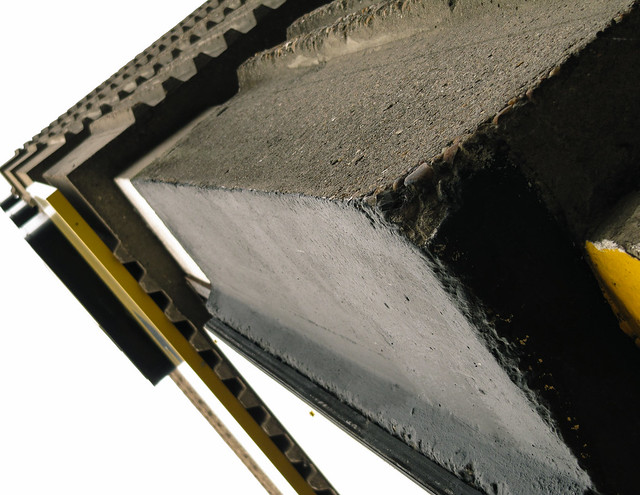
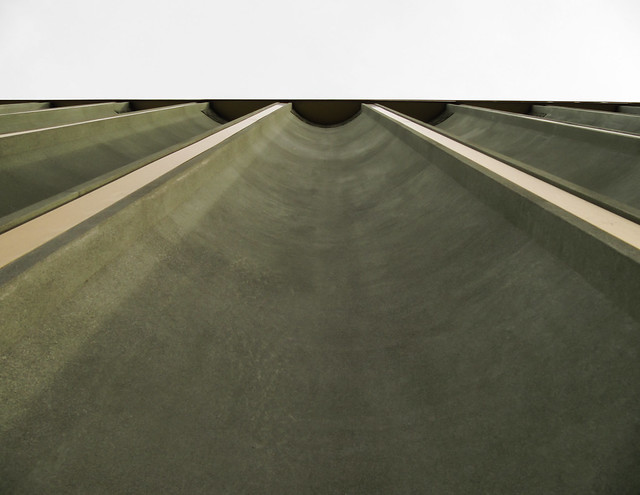
I was in London this month for a conference and as luck would have it the venue was to be the brutalist paradise of the Barbican centre. For some at the conference, the beauty, geometry and texture of brutailsm was a new experience. Personally this is an architectural style which has never failed to inspire. In my minds eye I see a vision of the future which embodies hope. A coming together of form and function designed to make you take notice whilst at the same time creating an environment you can live with and in.

The conference involved long days in hot lecture halls but as the evening light lingered with promises of summer I had plenty of time to capture my two favourite subjects, people and architecture.In fact if you ever get the chance to shoot the Barbican I recommend going when the sun is low in the sky and the buildings cast majestic shadows across the squares and walkways. Some may think concrete  can be nothing but boring and flat but I would challenge anyone to find a single surface of the Barbican which is anything but a feast for the eyes.

Barbican Brutalism I
Barbican Brutalism III
The Barbican centre itself is brimming with culture and I certainly need to book another trip where I have time to enjoy the galleries, cinema and cafes. The energy from the people who come for the performances and shows is palpable and spills out across the fountains and into the buildings themselves. Light and sound bounces back at you so you are surrounded by the electricity of the place and the people.

I stopped and talked to Tony, a professional musician who was sitting below a grand crest of the City of London. Tony was waiting for friends and had tickets for a Tchaikovsky violin concerto. We talked of London and his career in music. The following day he was playing piano at a retirement home near to where my grandad lives and where my family are from. I find the happy coincides which come from talking to strangers are always memories to cherish. All in all my trip to London and the Barbican was a very successful one indeed.
Barbican Brutalism IV
Barbican Brutalism V

Nottingham; a city to call my own

Nottingham-1601.jpg
This is my city. There are many others like it but this one is mine. Or at least that is how I am starting to see Nottingham. For in seeing a city the way I see Nottingham now I feel like I am part of it and that it is mine to be a part of. My relationship with the city has been a relatively short one but like many love affairs it already feels like I couldn’t be without it.

I still know very little about the city in truth. Most of my my time has been spent on the south and east sides of  Nottingham but what I have found has already given me a more than I could have expected. For me a city is as much about it’s grand architecture as it is it’s beautiful mistakes. In a city colour and form come together in ways which inspire and enchant but are simply passed by and ignored by most.
BJCC-1706.jpg
Nottingham-0163.jpg
I have met many interesting people and found many interesting places in Nottingham but the jewel in the crown is Nottingham Contemporary. Just seeing the building brings a smile to my face and sometimes I feel I am drawn to it like a compass to magnetic north. Despite our short acquaintance this is now one my of favourite places to be in the world. I have found joy, sadness, humility, contemplation and plethora of other emotions within the white gallery walls and I come away feeling renewed. My photography has benefited greatly from having such a fantastic cultural resource so easily accessible.
Nottingham-0179.jpg
Nottingham-0180.jpg
The gallery isn’t my only draw to the city. The near by lace market district is a gift to any street photographer. Its fantastic architecture and laid back atmosphere makes for a great place to shoot and relax. Each corner and side street holds a different cafe, record or book shop which are a welcome distraction. Photography comes to the slow and deliberate, the contemplative, those who live and feel in the now. The lace market helps me find that place in my mind.

So whilst there are many beautiful cities across the world I am happy to be able to call Nottingham my own even if it is only in some small way.
iPhone-3497.jpg

Ode to art deco

Odeon Skies III

The Odeon cinema in Loughborough has drawn me like a moth to a flame since our arrival in the town last year. I find the art deco façade of the building to be inspiring and I have photographed it on many occasions. The lines and contours of the building look to me as if a graphic designer has taken a pen and drawn across the sky. I love the way the Odeon sign works with the building. The lines of the sign like the façade are very clean but in a very different way, modern and shinning. Where the sign meets the building the paint has flacked away as if it is sympathetic to the older façade. The overall result is extremely pleasing.

It’s not clear as to whether the building you see today was how it was when it was built. The cinema was originally opened as the Empire in 1914 and was designed by Archibald Hurley Robinson. It seems that the building was refurbished in 1936 and perhaps the façade was updated (1). I would image that the architecture would have been even more splendid when it first opened it’s doors.

Odeon Skies I
Odeon Skies II

Recent news in the town is that we are to have a new multiplex cinema. The cinema including it’s new bars and restaurants will be built on the site of the old hospital at Baxter Gate. The construction has began but there is little above the ground at this stage. The hoarding around the site includes an artists impression of what the finished building will look like. I can’t say that it fills me with the same level of inspiration as the Odeon. I wouldn’t expect the new cinema to be built in a similar art deco style but I would have preferred it if they had designed something more inspiring than brown brick and shop fronts.

I wonder what the fate of the existing Odeon will be? Whilst the university increases the number of people in the town during term time I can’t imagine that there will be enough demand for two cinemas. It would be a shame if the Odeon were to be abandoned and it fell into disrepair. The cinema in my old neighbourhood of Kings Heath was left in this way and it wasn’t long before it was struck by arsonists. That would be a sad ending indeed for a building which has inspired me the way the Odeon has.

Odean Skies IV

How do you create a photograph which is of the moment?

Dinner
When reading about photography, being of the moment or capturing the moment is a recurring theme. By it’s very nature photography allows you to stop time and hold it in your hand but capturing the moment hints at more than just taking a picture. When we say “You captured the moment really well there!” we are normally implying that the image conveys an emotion or an idea which is evident in it’s viewing. So what makes an image of the moment and how can we capture it and hold it within two dimensions? I’m afraid like many things there is no magic formula but I have been investigating the practical things you can do which help to define and convey an idea in a photograph.

In a recent post I spoke about how I have started to understand what it means for an image to say something about me. Since writing that post I have been reading Dan Winters Road to Seeing. The subtitle of Dan’s book is Voices That Matter and in his book he writes about the importance of having a voice in the photographs you take. Dan explains that photography is a form of visual communication and if you are conscious of this fact you can use it as you would a spoken or written language.

With a spoken or written language, culture has a part to play in how it is understood and with a visual language there is no difference. Essentially visual culture is built on a set of conventions which hold meaning to those who are a part of that culture. These conventions are part of our everyday lives and are used by advertising companies, designers, artists and many other to convey a visual message. These ideas of visual culture are so prevalent that most of the time we don’t even notice they are there or that they are shaping the way we think or feel about something.
Colour
So if we go back to the idea of capturing the moment being about conveying an emotion or idea we can start to see why thinking about a photograph as a medium of visual communication is a useful thing to do. When you also combine this with the idea of a visual culture we can try and understand how how these conventions play a part in that communication.

This is all easily said but like many things it is not necessarily straightforward to do. Most of us are well practiced in speaking or writing to communicate and we can see how someone is feeling by picking up on visual cues but communicating a complex idea in a photograph can be a daunting task. The world of portrait photography has a good example of this. Quite often you will hear people say that  a portrait captures the soul of the individual who is in the picture. Photographing a smile is easy but how on earth do you photograph somebodies soul!?

The Lunar Society IV
What happens if we dissect the idea of capturing somebodies soul in a photograph? For the sake of my own sanity and yours, I’m going to define the soul as the facets which make a person who they are. This could include whether they are a serious person, a happy person, a friendly person, a creative person, a workaholic etc. If we go back to our idea of a photograph as a form of visual communication which is based on a visual culture we can use cultural conventions to communicate the facets of a person along with their smile.

You can of course take a picture of your creative, animal loving friend holding a paintbrush and hugging a cat but you might find that you have neither captured their soul or the moment. There is also a good chance that it won’t feel like it is your voice which is speaking through the photograph you have created. Sometimes cliches are useful in photography but one of the most beautiful and engaging aspects of the medium is that there are numerous techniques which help you to convey an idea in a subtle way. Many of these techniques rely very little on the subject itself. For example; the way in which you use expose can radically change the way the final image makes you feel. Again this relies on our visual culture to communicate the idea the same way a paintbrush conveys creativity.

I have found that in order to capture the moment I need stop looking at the dials on my camera and start looking around me. I try to make a connection with the place or person I am photographing and convey the way I feel in my composition. I have also found that trying too hard to make this connection can be just as bad as not trying at all. Personally I find the photographs which give me the most satisfaction are created when I have the time to walk around a place with my camera at my side or still in bag. This helps me to soak up the atmosphere and find my voice. I have now started to see images out of the corner of my eye, sometimes almost as I am about to walk away.

So now I can see my voice I am hoping to try and nurture it by the way I approach my photography and the way I edit and review my work. Like many of my posts it has helped me to write this down in black and white. I wonder how I would convey this in a photography!?
From a low angle

Familiar Strangers

Familiar Strangers VI

To those close to me and friends in the know, Loughborough fair is the stuff of legend. As winter approached last year the stories started to flow about the spectacle and size of the multicoloured thrill rides and sugary treats that made being a child in Loughborough so very worth while.

With these stories going through my mind I ventured out to find out for myself. Will the lights be as bright as I had been told? Will the rides carry on forever with, every corner revealing a different way of spinning you round or turning you upside down?

Familiar Strangers V

Familiar Strangers IV

I admit it, Loughborough fair is legendary. It did seem to go on forever or at least further than I expected. It wasn’t the fair that really interested me however it was the people who worked there. In the end I went to the fair two nights in a row. The first night was a Thursday, the fair had just come to the town and it was fairly quite. The boredom was evident. The people behind the candy floss and tungsten glow did this day in day out and its wasn’t surprising that they were bored.

Familiar Strangers III

Familiar Strangers II

Friday night was different, people pushed through the streets between the rides. Some of the fairground workers clearly enjoy their jobs. Enjoy the noise of the crowd and the brief conversations. It occurred to me then that it isn’t just the fairground that is familiar to the ticket sellers, chestnut roasters and hook the duck callers. They also know the town just as well.

How many times had they pitched there stalls and rides in the market square? Did they recognise the families that returned every year? One year older but never too old to enjoy themselves. Familiar strangers both.

Familiar Strangers I

Which way is your photography taking you?

People of Loughborough I

Moving house has shown me something interesting about my photography that I might not have discovered without a change of scenery. Most of the pictures in my portfolio were taken in and around where I lived in Birmingham and I had grown used to shooting in those places. In fact, one of my favorite things to do was travel into Birmingham City center and shoot candid street photography. I knew the city very well, I was comfortable there and I could generally find something to capture my imagination.

Perhaps part of the comfort of shooting Birmingham came from the fact that I have spent most of my 34 years living there. I can certainly remember being nervous about moving to Loughborough. This was partly because of everyday changes that come from moving to a new town but it was also because I wasn’t sure how the move would effect my photography. I struggled to imagine how the small town would ever compare to the vast possibilities of Birmingham.

Whilst Birmingham and Loughborough are different in many ways the one thing they certainly have in common is their markets. Yes they are on a different scale but they still have the same ingredients of people, vibrant colour and lots of different things going on in a small area. So after the move this is one of the first places I took my camera and I was pretty happy with the results.

Loughborough Market V

The market helped me to get over my initial concerns and I soon started taking my camera with me in and around my new home town shooting all sorts of different scenes. This is where the problem arose, I started to get bored by my own images.

Just to be clear it wasn’t the act of taking the pictures that bored me or the subjects, it was the images themselves. I was processing and sharing images in my portfolio that just didn’t do anything for me. For example I took this picture of a steam locomotive not far from my house on the Great Central Railway:

Once more with feeling

To be honest I am pretty happy with this picture as it goes. I like the composition and the light that falls on the roof of the carriages having been filtered through the steam of the locomotive. I’m also happy with my post processing and how I was able to bring through the contrast in the steam itself. Sure there are things that I would change about this image if I was to take it again but that’s the same with any image that I take. My Flickr followers like it too and according to Flickr it is one of most interesting images.

So what’s wrong!? If I like it so much why do I say that it bores me!? I have thought about this question for a while now and I have come to realize that it’s because it doesn’t say anything about ‘me’. Yes I enjoyed taking the picture, yes I generally like the image and I even find the scene interesting but it doesn’t feel like there is a part of me in the image. It doesn’t feel like it is saying anything on my behalf.

At this point some of you may be saying ‘so what!?’ and that’s fine. Not everyone takes photographs for them to say something and to be honest maybe I didn’t realize that is what I wanted either. If I am being even more honest until I started to have these feelings about these images in my portfolio I wasn’t even sure what it meant for an image to say something about me. Now I think I do and I can’t seem to let it go. I even made a Flickr album to try and understand the direction my photography is taking me.

The Lunar Society XVIII

The observant of you would have noticed that I only think I know what it means for an image to say something about me. This is all pretty new for me. A new feeling about my photography and new metaphorical lens to hold up against my images. I’m not entirely sure where my photography is going to take me but I’m pretty excited to find out.

What is your Flickr stratergy?

Untitled

A little while ago I found Issuu. Issuu is a digital publishing platform which allows companies and individuals publish books and magazines for free. I have found some really great content on Issuu and the other day I came across Explore Flickr by Swiss Photographer Thomas Leuthard.

I have been using Flickr for a while now but with no real plan in mind. I chose Flickr based on the fact that I already had some friends that were using it and when I picked up a camera again it seemed like as good a place as any to share my work. Much like in the days of chemical photography an image is no good to anyone if it is left unseen. In our digital age we have swapped draws of negatives for hard drives full of digital files.

One of the questions Thomas suggests you ask yourself is “Why am I a Flickr user?”. Unlike Thomas I don’t make any money from my photography. It is a creative release for me rather than an income stream and so building up a profile with a view to generating interest from prospective clients isn’t what I want. So what was I using Flickr for? Is it OK to simply use it as a modern day photo album?

Looking back at the first pictures I shared on Flickr I can instantly see how I have grown as a photographer. Both my technical and creative ability has improved and this is a pretty good feeling. I believe that I have come to an important point in my photography and I want to continue to grow and see my work branch out and become a reflection of myself and how I see the world. So to answer the question why am I a Flickr user?; I want to build my portfolio and share my work with other photographers, to get constructive criticism and find inspiration from the work of others.

The Lunar Society I

So whilst some of the strategies and ideas given in Thomas’ book won’t help me reach my personal goal some of them seem to be a good fit. Here is a short summary of the changes I have made to the way I use Flickr:

Don’t upload straight away
I have created a new collection in Lightroom called ‘To publish’. Instead of publishing images on the day I process them I first move them to this collection and leave them there a couple of days. This gives me some time away from an imagine after I have finished working on it and helps me to see it differently when I come back to it. A few images have been edited or rejected all together because of this strategy and I think my portfolio is better for it.

Upload no more than one image a day
This helps with the first strategy but it also means that my portfolio has more regular updates which makes it more likely to get some feedback from other Flickr users.

Upload to more relevant groups
I now think more about which groups I upload my images to. I spent some time looking at the groups my favourite photographers contribute to and I searched for some new groups that I thought had interesting content. I also sought out some groups that are specific to my local area where I live and made some connections with local photographers.

Compare each newly uploaded image against similar images on Flickr
One way to critique your own work is to compare it against others. I now spend some time looking at similar images after each upload and think about what has drawn me to any given picture and how I might have changed my own work to include different ideas and viewpoints.

Leave it a couple of days before adding pictures to groups
Thomas suggests that this is a good strategy for getting your images to be selected for Flickr Explored but I like to do this to see how much interest and image gets organically before it is added to any groups. Whilst not very scientific it does give me some indication of whether or not people think it is a picture worth looking at.

Give feedback to others
If I want to get feedback on my own work then it makes sense to be more involved with the Flickr community as a whole. I find that giving feedback in groups that I contribute to or to photographers that I follow also helps me to think about what has drawn me to their image and how I might apply similar ideas to my own photography.

Follow photographers you find interesting
I have always regularly looked at the images of the photographers I follow. With the iPhone app it is easy to keep up to date with new images and if nothing else it inspires me to pick up my camera or process my next batch of RAW files. Unlike Thomas however I don’t follow somebody just because they follow me, I wan’t the pictures in my Flickr feed to inspire me and give me ideas or something to aim for.

After making these simple changes to the way that I use Flickr I honestly feel like this has helped me to improve my portfolio. I have still got a long way to go but that is all part of the fun.

Starting on the road to documentary photography

UrbanWildlife-1582.jpg

Since I picked up my camera again I have worked on a number of small projects that have helped me to improve my photography and given me something to work towards. For a while though I have wanted something bigger to get my teeth into. I have had a few ideas about what this project might be about but having recently just moved away from the city that I lived in for most of my life I wanted to use the project to find out a little more about the town that I have come to live in. I could potentially do this with a street photography project but I wanted to learn more about the people themselves and so I had the idea of starting a documentary project.

Documentary photography is a form of photography which was extremely popular in the mid 20th century and has experienced a lull more recently however a number of talented photographers have started a resurgence in the field and are producing some hugely interesting and inspiring work. Whilst I don’t feel like I have honed my skills enough to produce anything close to the work of any of these photographers I hope to learn a lot from the project both on a technical and personal level.

So where do I start on the road to documentary photography? In one of my previous posts I shared a photography project framework which I intend to follow for this project. With this in mind I went out and purchased myself a new notepad and made a start noting down my ideas. Personally having a small notepad that I carry around with me most of the time really worked. Whenever I had some time at home or in my lunch break at work I read through my notes and expanded on my idea. I also spoke to some of my friends about the project and this helped to make the project feel more real and lead me to even more ideas.

New notepad

Creating the mind map

Eventually I had quite a few notes and I was starting to feel like I wanted to move onto the next stage. Before I did that however I want to write my notes up as a mind map. I was hoping that this would help to give the lists of ideas some structure and build a picture of how a plan for the project might come together. I had previously found an online tool for creating mind maps but another search uncovered a different tool which I felt was a little easier to use: http://drichard.org/mindmaps/. You can see the mind map that I produced below and if you are interested then you can get a copy of the original JSON file here.

Documentary Photography Mind Map V1

Just as I thought I had finished putting my ideas together I found out that Huck magazines current issue was a documentary special. With this in mind I thought that this would be a great opportunity to expand my ideas further. Once I have done this I will be sure to write another post and share the updated mind map. If you have any comments or suggestions then please add the comments to this blog post.